





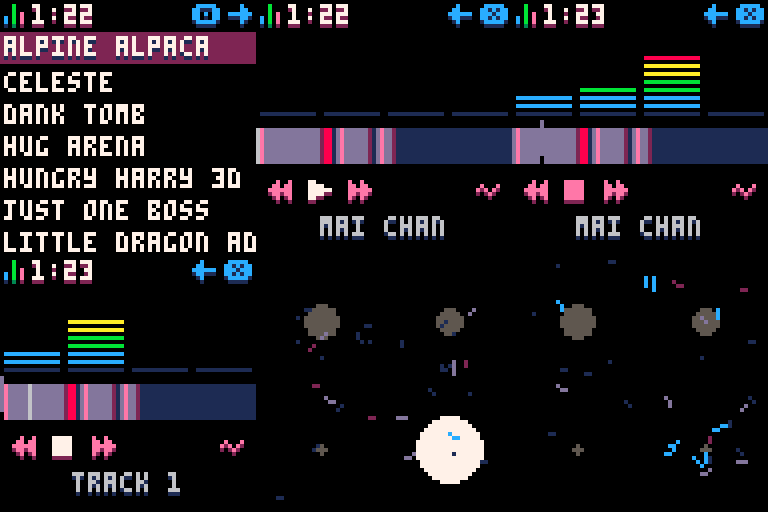
Picotune is a cute, 64x64 music player for your local PICO-8 carts~
Usage
- Place Picotune in your carts folder
- Place other carts in your carts folder
- Listen to your favorite tunes!


 13 comments




Hello! I was wondering if there is any to get a sprite to snap to a 16x16 grid like a map cell would, my main goal here is to make a sort-of mini map editor, but I can't seem to get the sprite to snap to the correct coordinates. Thank you!
2 comments



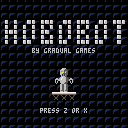
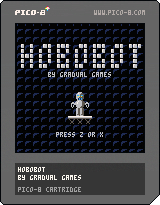
Hobobot is about a robot that was destroyed and junked. But, his parts still work, and he wants to be whole again! Control each of Hobobot's two legs and two hands, and kick his head and get them all back to the torso!
Controls:
z - Switch hobobot piece under control.
x - Perform action related to the current piece. Legs can kick, hands can grab.
arrow keys/dpad - Move current hobobot piece left or right. Or, perform left/right action.
enter - Bring up in-game menu. You must use this to restart the current level if you get stuck.
The head cannot be controlled, you must kick it with one of the legs.
There are 16 levels in total, which progress from fairly obvious mechanic-practice levels to mind-bending puzzles.
11 comments





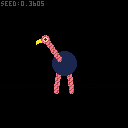
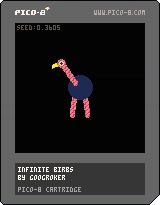
An experiment with random generation. Z plays the bird's call, and X generates a new one.
14 comments





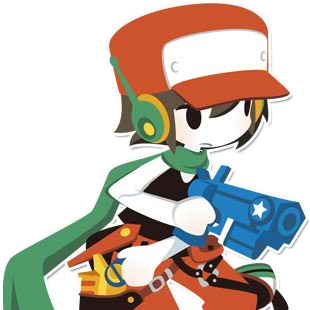
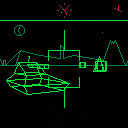
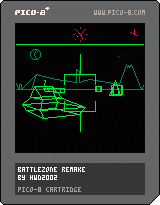
My attempt at recreating a Battlezone(ish) game. Drive the most advanced and realistic tank simulator since the bulldozer. Hide behind various (two) creatively designed geometric shapes on the battlefield and battle numerous (three) types of enemies. Wonder why the lava on the volcano is green.
Controls:
- Arrow keys to drive tank or select menu option
- Z/X to fire
Optional: - Tab button to change to third person view
- P2 left and right to turn turret
- P2 Down to fire
- P2 Up to turn tank body toward turret
P.S. You can swap the colors to the Gameboy color scheme from the menu.
Thanks to jdan for the demo I adapted to make this: https://lexaloffle.com/bbs/?tid=4126
10 comments







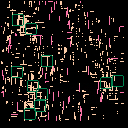
Info: This is not a game. You can't control any actions.
Hebilife is a simulator of an articifial life.
Pink dots are snake, beige ones are foods and green ones are walls.
Snakes have a brain and decide directions to move themself. The brain is made by a neural network.
Snakes will evolve to avoid walls and other snakes.
This is a porting version of this:
https://www.youtube.com/watch?v=G-0ebBgrXhg&t=166s
2 comments

Update: The way the vignette effect was implemented depends on a quirk of an older version of PICO-8, and is no longer performant enough to run well. I plan on updating this with a new, more performant (and better looking) effect soon.
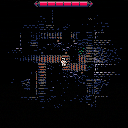
The controls aren't well communicated in-game yet, but can be loosely explained as follows:
- Press and hold ❎, 🅾️ or both buttons to enter or change between stances, each of which offers different attack and defense options.
- The current stance type is indicated by the color of your outline.
- ❎ for attack stance (purple, red aura)
- 🅾️ for dash stance (blue aura)
- ❎+🅾️ for bash + block stance (green aura)
- Release ❎ to Attack (Strike or Bash).
- Release 🅾️ to defend (Dash or Block).
- When held for a long enough time, a stance will transition into a more powerful version.
- Attacks and actions are indicated by the color of their circular icon: red for attack, green for bash, blue for block.
- Charged action icons are indicated by a gold border.


3 comments


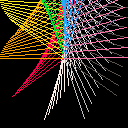
This was one of the first things I did in Pico-8, seeing other people do small graphical art pieces and wanting to do it myself, I started looking at other peoples tweetcarts (probably from @guerragames, since I mentioned him in my original tweets about this) and began playing with sin and cos myself. It had been a while since trig class. I was rusty on how they worked and after some time re-learning how to make a circle I made this.
One thing I learned while playing around was what printing could do if you didn't clear the screen. I found this out while trying to print out a debug statement! The line feed creates a really interesting effect if you're playing with motion, and purposefully using empty prints to achieve this is not something I've seen many other people play with.
1 comment
Hey there!
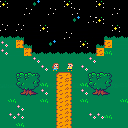
I'm very new to Lua/Pico-8/programming in general, and I've been cobbling together code from Youtube tutorials and other threads to make this cart. Ideally, I want to make a super basic, top down adventure game (game length about 4 mins) with the player being able to trigger dialogue from different characters on different screens (I just made the "NPCs" background tiles with x,y values that trigger dialogue, because that seemed like the easiest way to implement that...).
I've been looking at a bunch of tuts for camera control, but I can't seem to wrap my head around it (every time I THINK I'm making a table for my player, there is an error). However, I did find a way to change screens Zelda 1 style (right now, the character can walk down at bottom into a new screen and back up into the first screen).
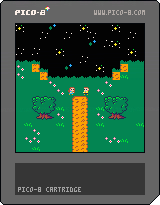 2 comments


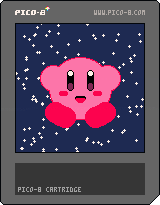
This is a Pico-8 doodle I made a while ago using only circles. I wanted it to be the first cart I published on the BBS because I love it so much. It might be one of my favorite things I've ever made.
I tried as closely as possible to follow the traditional tutorial of how to draw Kirby:
First you draw a circle,
Then you dot the eyes,
Add a great big smile
And presto, it's Kirby!
I have plans to add some animation to Kirby himself later on, but for now I just wanted to share him with everybody!
EDIT:
I forgot, but I actually was inspired to do this because of a tweet from @thekirbybot on twitter!
https://twitter.com/thekirbybot/status/1009457661405028352
8 comments




I just got my looking glass! All the demos are really slow on my 2018 macbook air (ofc), except Voxatron. It runs full speed, awesome performance. It's really fun to play!!!
I want to write my own games for the looking glass. If I use the unity sdk, I'm afraid everything will be too slow. Is voxatron fast because it uses the c api and no unity?
3 comments


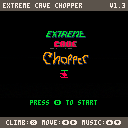
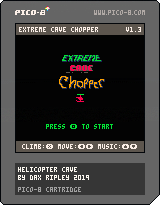
Dodge rocks while avoiding the cave walls! Every 100 points, the cave colour changes, and your speed increases slightly. Inspired by the old Helicopter web game from the late '90s / early '00s.
v1.3 changes:
- Added rocks that fall as you play, which increase in frequency the further you go
- Added ability to move left and right (to avoid said rocks)
- Lowered player speed increment as you progress
- Added fancier sprite-based title screen
v1.2 changes:
- High score is now saved to base ram, and loaded on cart init
- Mute music by pressing O+X together
v1.1 changes:
- Fixed bug that displayed old high score and new high score simultaneously
- Adjusted some colours and text
1 comment

I don't know if anyone remembers Egg Emergency, a mini-game from Pokemon Stadium on the Nintendo 64. It was one of my favourites, and as my first Pico-8 project I thought I'd remake it in 2D.
It lacks a lot of features, but I had fun making it!
4 comments
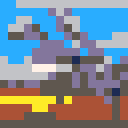

Hi everyone, for my first effort in pico 8 I made a small arcadey platformer. Try to keep your cool and survive as long as possible while lava chases you down an endless tower.
Controls:
left/ right - run
Z/C/N - jump
X/V/M while running - slide
Enjoy and let me know what you think!
4 comments



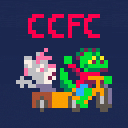
There's a great party going in Malmö but the guests can't seem to get anything done themselves! Use your trusty cargo bike and get your friends to Systembolaget, receive spiritual healing from Spökguden, or just take out the trash.
Done as an Xmas present to my good friend Loke, who DID keep the party going! My aim was to create something like Crazy Taxi with Frogger controls.
Music by @gruber_music
Don't worry about the in-jokes
1 comment
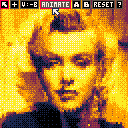
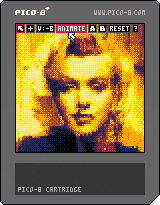
Pico Image Morph 2000
Use your personal Pico-8 computer to create professional-quality image morphing effects as seen in blockbusters such as "Willow" and "Terminator 2". Use the power of Pico Image Moprh 2000 to seamlessly transform one person into another or even change a cat into a dog!
Pico Image Morph 2000 can even be used to create wacky deformations! The possibilities are endless!
Instructions:
Pico Image Morph 2000 requires the use of the Pico Mouse Accessory.
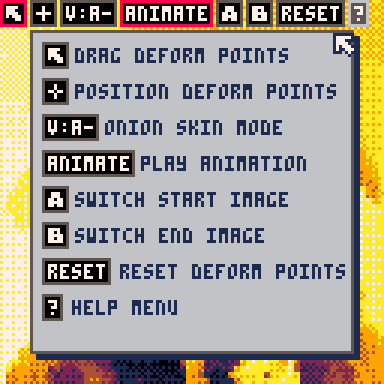
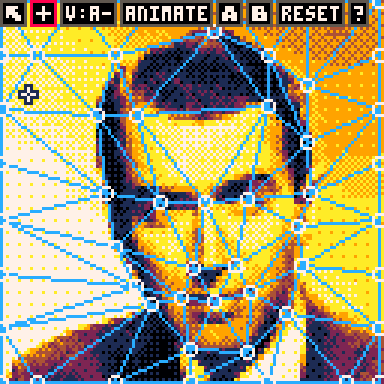
While in "Position Mode", locate deform points along critical portions of the image, such as centers of eyes or the edges of lips.
Switch to "Deform Mode" to drag deform points to new locations.
Use the "Onion Skin" button to switch between viewing the Start Image, Target Image, or a blended overlay of both.
Click the "Animate" button to loop the animation
The system include 5 different image to morph between.
4 comments
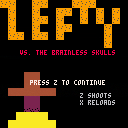
Lefty vs. the Brainless Skulls!
My son (11) and my (42) first Pico-8 release, emphasized learning the system over real playability. A ton of fun to make. Source code is available via Lefty vs. Brainless Skulls Github repository. We also listed it on the cmcavoy itch.co.
Gameplay is very basic, run around, shoot the skulls. The skulls jet around in random directions. We added a health counter and limited bullets to make it at least a bit more interesting. A couple of things that we learned that were particularly revelatory - collision detection, game state (having a startup screen) and animation pacing (though Lefty himself needs a bit of work). Map drawing took a while to wrap our heads around. The (simple) math around screen pixels to map tiles had us stumped for a while.
2 comments


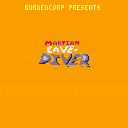
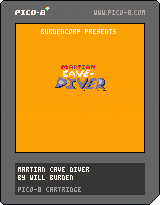
My expansion on Dylan Bennett's Cavediver game from their Gamedev With Pico zine (https://mboffin.itch.io/gamedev-with-pico-8-issue1).
Controls:
- Button 5 : jump / start (x by default)
- Button 4 : start Crazy Mode (z by default)
 1 comment

