



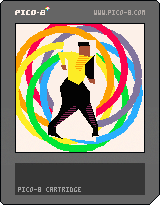
This is a work in progress output from a vector animation tool i'm writing in javascript/canvas.
The tool enables you to use the mouse to draw vector shapes and import them into pico8 as data, to be used the same way you would use a sprite, but with scaling and such.
Its not quite finished yet so i'm not letting the vector tool out to the public but here is some output.
This is the legend MC hammer, rotoscoped into low poly 2d over some of @guerragames tweetcarts from twitter (used with permission).
The way the cart displays the polys is some super fast tri code i found here on the forum. I'd like some help in making it faster and i think the person who write is is here:
https://www.lexaloffle.com/bbs/?tid=28317
Its the vector tool i'm showcasing really. :)
Tweet (with gif) here: https://twitter.com/gabrielcrowe/status/904421706659495936
Online tools to do this soon, I promise.


 10 comments






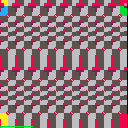
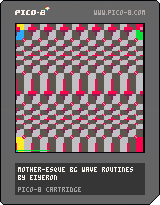
Hey there, I did a few weeks ago a mini cart showing how Earthbound or Mother 3 would do most of the background effects.
I redid the whole routine and made two versions, vertical and horiztontal, which should cover a big part of the basics behind those games' technique (the rest being layer blending, scaling, palette cycling, or alternating backgrounds per line).
There are two implementations, sspr-based and map-based. The sspr based uses the data of a sprite at given coords and size to tile it on the screen whereas the map-based routines uses the map routine to directly draw a line of pixels on the screen. The map-based routines uses part of the map data but it makes up for allowing more than one sprite to be used, as you can see with the sample's colored corner areas.
Notes about the implementation:
- I used time, amplitude, frequency and scale as global variables to make the implementation a bit less repetitive but you can pass them as arguments to the functions to have different settings
- The map-based routines (map_<routine name>) assume that you're using at least a 16*16 map, but can be bigger. I haven't programmed an iteration allowing to use smaller maps to make it faster (as it'd use more than two map calls per line)
- The map routines overrides camera and clip settings. Make sure to save their context before using.
0 comments


Working on my game, I often find myself wondering how much cpu such or such construct uses.
I do my benchmarks using stat(1).
Issue is, my measures are all over the place according to the number of samples :[
Ex: Let's bench band vs. % and shr vs / @ 100 calcs/update
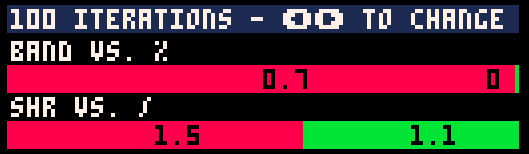
Good, % is almost free, / is slightly better than shr
Let's try 200:
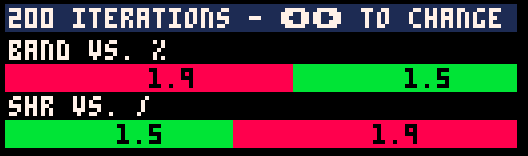
Hu? shr is now better than /
Push it to 300:
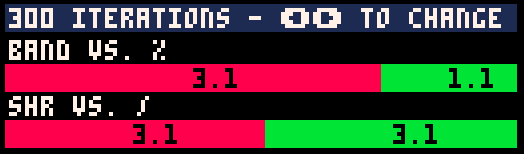
Back to "normal"
400:
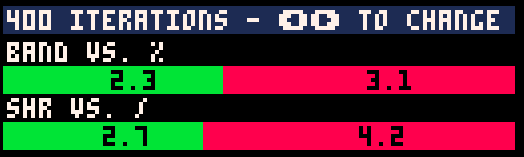
WTF?
How come number of samples for a given run is turning results upside down?
Note: if I push number of iterator further, I tend to have stable results - but who's performing 5000% per update cycle?!?
On top of that, @zep, we should be provided with op cost of basic operations (similar to cpu specs).
Reference code:
function bench(name,n,fn)
	local t0=stat(1)
	for i=1,n do
		fn(i)
	end
	return {name,(stat(1)-t0)}
end
function stat2pct(s)
	return flr(1000*s)/10
end
function bench_draw(name1,stat1,name2,stat2,y)
	print(name1.." vs. "..name2,1,y,7)
	y+=6
	local total=stat1+stat2
	local pct1,pct2=stat1/total,stat2/total
	local c1,c2=8,11
	if(stat1<stat2) c1=11 c2=8
	local x=flr(128*pct1)
	rectfill(0,y,x+1,y+6,c1)
	x+=1
	print(stat2pct(stat1),x/2,y+1,0)
	local x2=128*pct2
	local msgx2=x+x2/2
	if(x2<1) then
		x=127 x2=127 msgx2=120
	end
	rectfill(x,y,x+x2,y+6,c2)
	print(stat2pct(stat2),msgx2,y+1,0)
	y+=8
	return y
end

local res={}
local n=100
function _update60()
	if(btnp(0)) n-=100
	if(btnp(1)) n+=100
	n=max(n,100)

	res={}
	add(res,bench("band",n,function()
		j=band(546,127)
	end))
	add(res,bench("%",n,function()
		j=546%128
	end))

	add(res,bench("shr",n,function()
		j=90/8
	end))
	add(res,bench("/",n,function()
		j=shr(90,3)
	end))
end

function _draw()
	cls(0)

	rectfill(0,0,127,6,1)
	print(n.." iterations - \139\145 to change",1,1,7)

	local y=9
	for i=1,#res,2 do
		y=bench_draw(res[i][1],res[i][2],res[i+1][1],res[i+1][2],y)
	end
end
|
5 comments



Arrow Run is a fast-paced auto-scroller platformer!
Use your platformer and aiming skills to dodge spikes, collect coins and hit targets on this retro arcade-like game!
This was my entry for the "My First Game Jam: Summer 2017", it has been updated already a few times after that though.
>tch.io page<
8 comments









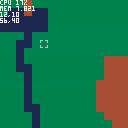
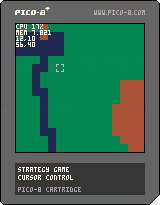
I'm just starting a new game from scratch and programming pico-8 feels really nice :)
So the first step is to have a cursor moving on a map. I wanted it to be really smooth and snappy and fast. So this is what I came up with.
Feel free to use it in your projects :)
 0 comments
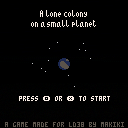
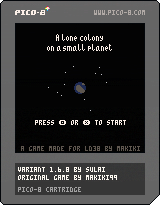
I'm happy to announce my very first contribution to the Pico-8 community, which is a spin-off of Makiki's game title "A lone colony on a small planet".
Your goal now is to colonize an even smaller planet, but with some difficulties added to it. So this one is a more of a thinking game, while Makikis original is more of fast builder.
Credits:
Story:
"You have been given a mission. You need to purify a small planet, so we will be able to colonize it. It is rich in resources, so it shouldn't pose a big problem for you. We believe in your management skills. Good luck." -- Makiki
Controls:
- O to build.
- X is a multi tool.
- build faster. you can keep it pressed and move around.
- select what to build by using X over an existing building
- get information about a building
- change transport type
- show the map and statistics
 2 comments


Hi all,
I wrote a Medium/ITNEXT article about the PICO-8 and it just occurred to me that it was maybe a nice idea to share it with you on this forum. You can find it here: https://itnext.io/eeny-meeny-pico-b7b31600e65a
Have fun reading and keep tinkering!
1 comment


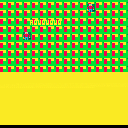
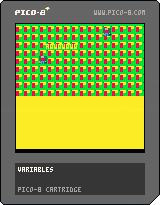
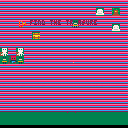
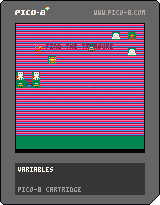
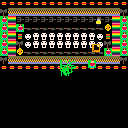

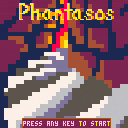
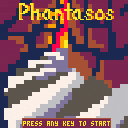
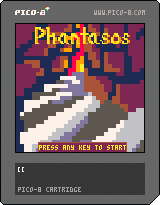
Phantasos is a fairly traditional tiled roguelike, heavily inspired by Powder. The game is by no means complete, but I've gotten it to the point where it's fun and stable enough for now. Fighting the token limit has been more fun than I expected, so I'll probably keep cramming in extra features until it's exactly at the limit and I can't find anything else to optimize.
3 comments

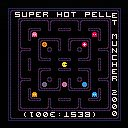
They stop when you stop! Rush through the maze in Pellet Time!
4 modes:
Super Kid Pellet: Pellet Time with speed & timing progression
Super Hot Pellet: Pellet Time at full speed
Super Mr Pellet: Classic muncher with speed & timing progression
Super Ms Pellet: Speed-hacked classic muncher!
Also playable on itch.io, Game Jolt, Newgrounds, [u]Kongregate
16 comments

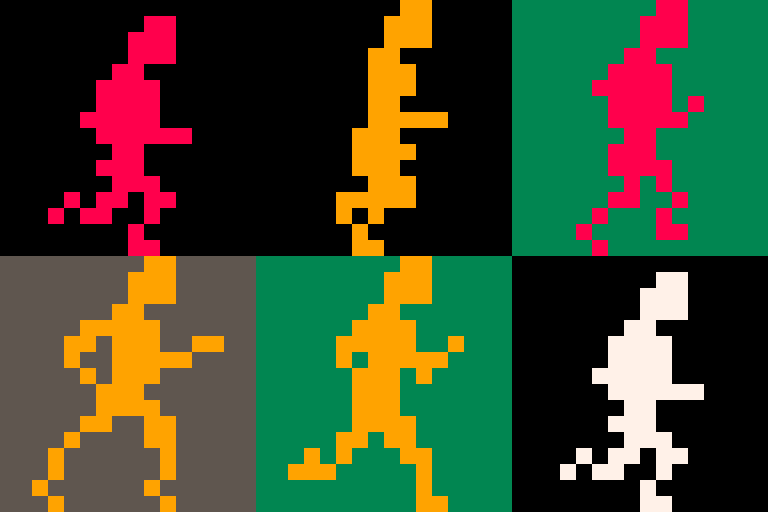

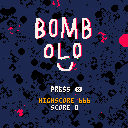

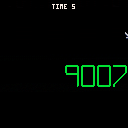
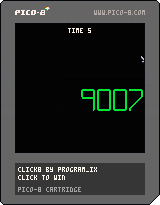
I've been threatening to do it for ages! And I finally did. I made a cart with mouse controls. It is a very simple game: click until you can click no more. That is approx. 32,000 clicks. If you're really bored and want to skip to the end, hold X and click.
That's it! I had fun making the number sprites and especially the cursor sprites. Just threw this together in an hour because it's been a very scattered month as usual.
itch.io page: here
1GAM August 2017
7 comments

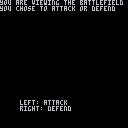
We made story-based pick-your-own-adventure games for class. I made one based on the Transformers series!
Use the arrow keys to pick your actions.
Choose carefully!
1 comment

Hi all!
I would like to build walls for a shoot'em'up and I know I can obtain the result with map.
What I do not understand is how to make the drawing dynamic.
For example I have the sprite 0 that contains my wall and I would like PICO-8 to draw walls on the side programmatically.
What would be the best approach to do so?
Thanks for your time and patience.
5 comments

Hi all!
I have this collision function:
function are_colliding(entity_a,entity_b) -- are entities hitting each others boundary and not the same type? return entity_b.x < entity_a.x + entity_a.w and entity_a.x < entity_b.x + entity_b.w and entity_b.y < entity_a.y + entity_a.h and entity_a.y < entity_b.y + entity_b.h end |
It works almost fine but it is not pixel perfect.
I would like to use it in my games and make it as flexible as possible...
For example an issue I am facing is that in my pong game I can have a round ball or squared ball, depending on theme "classic" or "modern".
This moves the "x" and "y" coordinates of the object I take into account and ruins the collision (here's the game in case it helps problem comprehension - collision is still done there "manually"):
https://www.lexaloffle.com/bbs/?pid=43786#p43786
Do you have a suggestion on how to make it as general as possible?
Thanks for your time and patience :)
1 comment

