






This is a very simple animation function that anyone can use in their games. It's a bare-bones demo to keep everything as simple as possible. The function itself is only 14 lines and 74 tokens, and works like this:
anim(object, start frame, number of frames, speed (in frames per second), [flip])
In the demo, the object is the player, but it can be anything. Start frame is where the animation to be played begins (so in this case, moving left/right starts on frame 6, so we have anim(player,6,[..])). Number of frames is how many frames in that animation to play. We have 3, so anim(player,6,3,[..]). Speed is how fast the animation should play in frames per second (I have it set to 10 here). Lastly, [b]flip


 3 comments




I was making a game and i don't understand how collision works thanks.
EDIT: I have read the collision demo and i was wondering if there is a less usage way to do that
I don't want to loose all my tokens.
2 comments

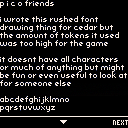
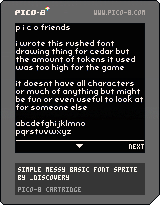
Press the up/down arrow keys
As the title states!
This isn't optimized at all, an exercise for the reader.
I drew the letters myself, as sprites, hence their existence in
the sprite sheet. Those are so you can swap either/or, and trade
sprites for code space and performance.
Have fun!
I threw the file on github as well
p.s The CC license isn't really applicable but I wasn't sure if NOT selecting it would imply you can't use it at all and now I can't edit that out it seems. The github repo has it as MIT license - you can do whatever you want with this!
2 comments



Does anybody know if the PICO-8 typeface is available as a regular font anywhere? I guess it‘s coded differently as a regular font in PICO-8 so someone would have to recreate it to use outside.
I want to create a game jam poster and of course it would look great to use the 5x3 characters for that, in print.
5 comments



Here's a recent interesting project which is completely unrelated to Pico-8.
http://superpowers-html5.com
It's an HTML5 game engine. More importantly, it's a free and open-source web-based development IDE. That is to say, instead of using Superpowers IDE to make Unity-like Superpowers games, you can add a plug-in to your Superpowers server to add additional project types, including (officially supported, in fact) LÖVE games and static webpages.
Superpowers is a real-time multi-user collaborative development environment unlike anything I've ever seen before, albeit still very much in its infancy. We should seriously consider adding Pico-8 cartridge support to it, as an alternative to using Pico-8's built-in IDE.
It would take a bit of effort, but with the result, you'd basically have the ability for any number of developers to simultaneously log onto a hosted Superpowers server, upload scripts and sprites, and download and run the resulting combined cartridge from the server in real time.
Superpowers is pretty much designed for small teams working together on game jam entries with strict time limits, getting all the work together immediately in real-time as individual files are changed and saved, without having to worry about committing and merging changesets like you would with Git or other collaboration methods.
... I don't know, just a passing thought. Probably wouldn't be worth it, considering how difficult it would be to manage Pico-8's arbitrary limits in a development environment meant to handle limitless modern PC games.
0 comments

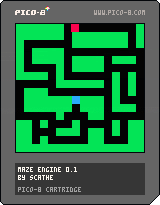
What is it?
It's not a game, but rather a framework for a specific genre of games ala Pac-Man and Burgertime. It's a complete skeleton framework with all of the basic functionality to create these types of games.
Features:
- A sample map with collision detection
- Outside of map bounds = collision; nothing can move out of bounds
- A player control system with automated assisted controls (it's difficult to line up exactly with a new corridor, so the controls will auto-correct to anticipate and compensate for this when a collision is detected)
- Enemy AI and movement in "oldschool" style; it does not use A* or other complex pathfinding algorithms, but instead evaluates the closest next direction to move in when it detects an intersection, which is what the oldschool games did.
2 comments


I've bought PICO-8 with the thought that it would be a neat way to learn coding and make small pixely games, but so far I can't get used to the language and workflow of Pico. I've tried deciphering other people's cartridges, but some things just make no sense. Is there anything I can do to learn Pico?
12 comments






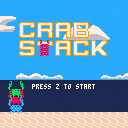
Hello! I made this short mini-game as an entry for Crab Zine, an art zine about crabs!
Check it out here: https://gum.co/QYpiZ/crablife
The mysterious crab billionaire, Pedals T. Crab, has offered to share some of his wealth with your crab gang. Press Z to jump. Catch the coins as they float past! Catch as many as you can!
Yellow Coins = 10 point, Red Coins = -50 point, Green Coins = 50 points
7 comments



Does this work? It says in the version history for 0.1.4 "fixed: multi-line comments", without any more information. If multi-line comments are supported, what's the syntax? Thanks.
9 comments




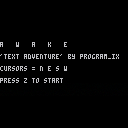
Like TRAIN, I started this game with the misguided idea that PICO-8 could do more things than it actually can. In this case, I was sure I'd read somewhere the console could allow text input if you did some weird mode thing. No idea where this idea came from.
In any case, I'd already written some of the room logic by the time I realised, so I figured a very basic exploration thing would be easier to play with just four directions and Z anyway.
Explore this weird building you're in, and try to find a way out. Arrows are North, East, South, West. Z is your action button although the only actions are starting or restarting the game.
Hope you enjoy! (Use this code and make your own adventure games!!!)
0 comments

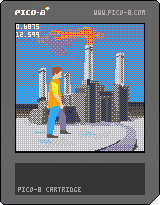
This is a first pass at trying to do something like Out of This World (or Another World depending on which side of the pond you land on).
Background is a static, shaded vector image that is rendered once at the beginning of the scene into a temporary buffer and then copied to the screen every frame.
The man is a moving vector animation that is rendered to the screen every frame.
Things aren't really structured for an actual game yet, but at least this shows that the concept could work.
11 comments








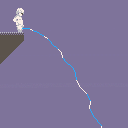
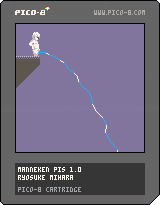
A Manneken Pis simulator.
Controls
- up/down : increase/decrease water pressure
- left/right : rotate aim
- z : hide/show HUD
15 comments






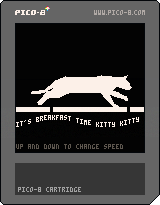
It's a filled polygon, smoothly tweened animation of a running cat. There's still a decent amount of space left for a program, or even more complex animation.
Thanks to Eadweard Muybridge for taking photos in the 1880's that are still useful today.
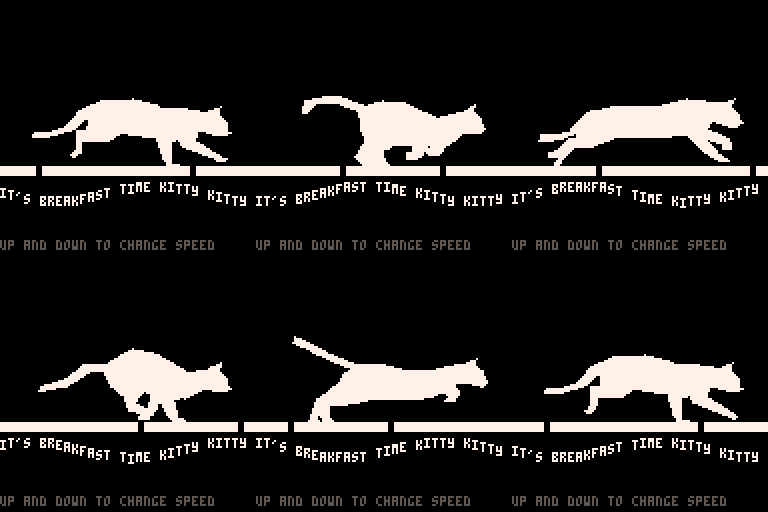
-Electric Gryphon
4 comments






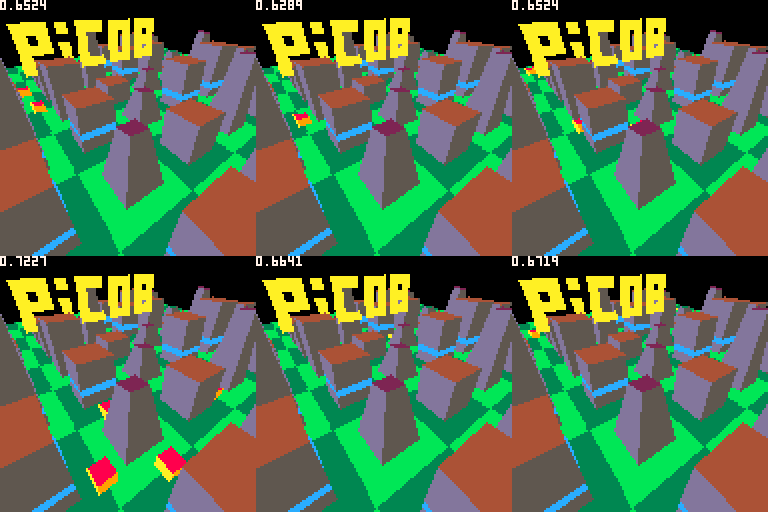
I wanted to try this since a long time:
The scenery polygons are rendered as a list of line segment for every line of the screen. { { x, z, color }, { x, z, color }, ... }
No need to sort anything because polygons are inserted in every line raster with z test (making previous segments moved or deleted inside every lines)
it takes less than 0.3 of the frame to draw this frame rasterized buffer even if it is quite complex.
Then dynamic model polygons are drawn on the top of it with z test.
I'm quite happy with the result, now I need to try more complex models...
This is just a demo yet. (It still has annoying bugs)
 2 comments

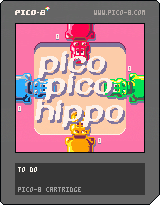
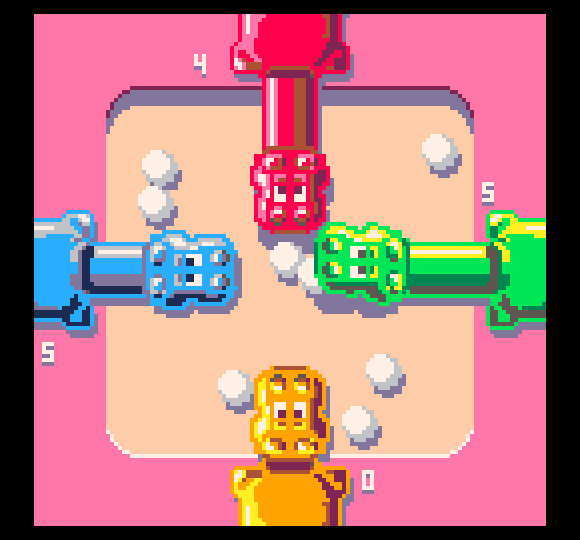
Relive the joy of the 80's with some key mashing and marble gobbling. Feed those peckish pachyderms as fast as you can to win.
This is a two to four player, shoulder to shoulder kind of game.
Up Arrow: Red
Down Arrow: Yellow
Left Arrow: Blue
Right Arrow: Green
If anyone feels an urge to replace the music with something better, please be my guest.
--Electric Gryphon
10 comments



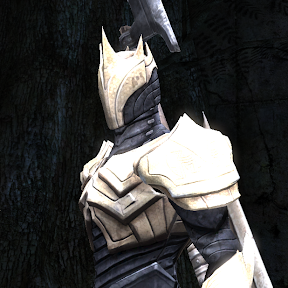




This awesome cartridge allows you to mine for a very long time.
Download the cartridge yourself, and edit the code! Inside are somethings you can edit, for a different charecter, if you want your charecter black, and some other cool configurations.
It's released as finished, but it will get big updates some times.
You can save your game too, so that's another reason to download it.
Download Game: http://adf.ly/1XZKLS
Guide on how to do simple hacks for the game: http://adf.ly/1XZSTd
Guide on how to do complex hacks for the game: http://adf.ly/1XZauL (how to make a block doesn't work)
TIPS:
Coal spawns after 12 meters deep - 10% chance spawning ( 1 in 10 )
Iron spawns after 40 meters deep - 5% chance of spawning ( 1 in 20 )
Gold spawns after 100 meters deep - 2.5% chance of spawning ( 1 in 40 )
Diamond spawns after 300 meters deep - 1.25% chance of spawning ( 1 in 80 )
Coal sells for 5c (c = coins)
Iron sells for 15c
Gold sells for 45c
Diamond sells for 135c
0 comments



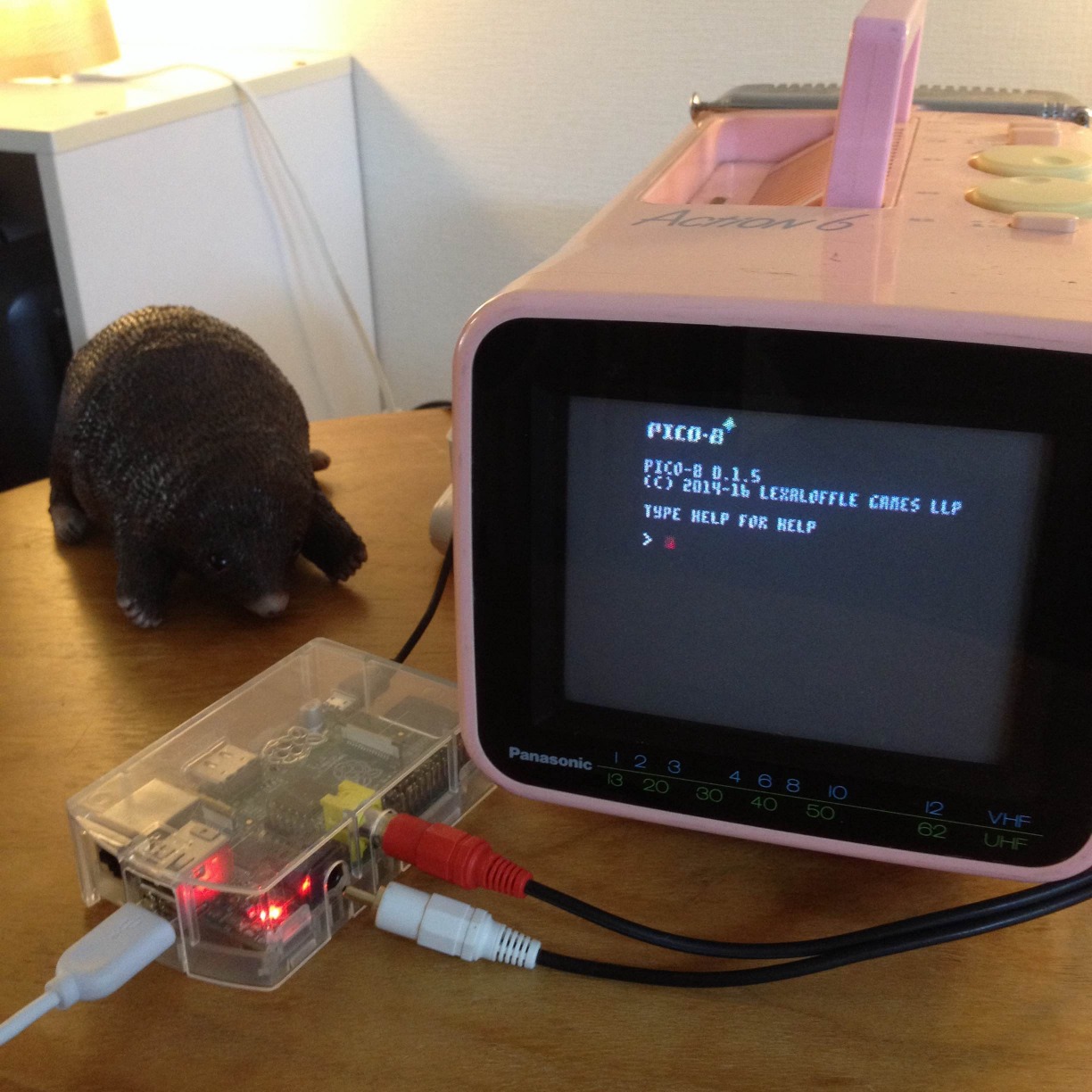
A build of PICO-8 0.1.5 is now available for Raspberry Pi! Check your updates page or look in your Humble library under the Linux downloads section.
It works in fullscreen under either X Windows or directly from the terminal (using directfb). For speed, the default resolution is 280,280; you can set this with the -width and -height switches:
pico8 -width 720 -height 480
Known issues:
- After quitting, keypresses during the session are sometimes dumped to terminal (annoying if you quit by typing shutdown instead of CTRL-Q!)
- Freeze on exit (observed on a zero)
- Some math-heavy cartridges (e.g. /demos/cast.p8) don't run at full speed on first generation models.
There are two builds included in the archive. pico8 is compiled statically (so no need to install SDL2), and pico8_dyn dynamically loads libraries, in case you'd like to supply your own SDL2.
Have fun, and please post pictures if you get pico-8 running on any cute displays!
93 comments









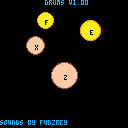
Hey guys! This is just a little music test that I have been working on, I might make a piano thing or something, I was playing around with audio, got a little sketchy and came up with a few retro drum sounds, (NOTE: These are NOT the original sounds from my test, I accidentally overwrote the file & forgot to get the backup, so I just reprogrammed it, but it works similar enough to my original, so it's good, Enough talk, more compose! Play around with it, and put suggestions below! Also, if you want, remix it! But give credit to me please.
 0 comments