


Covers of Cave Story music: Geothermal and Running Hell
Run these carts to listen to the songs


 4 comments


Deltascribe!
the semi-sequel to Drawtime!
just a fun little doodle app i wanted to make, mostly exported as a standalone executable for my friends without picotron to mess around in.
supports 5 layers, saving and loading '.scribe' files, and exporting all layers as a single .png
6 available colors (future update will let you set these to other colors)
5 tools including basic pen, eraser, line tool (scroll while dragging to have variable start and end widths), fill, and bucket!
7 comments







This is my first PICO-8 shoot 'em up demo.
It's very simple and lacks polish, but I'm excited to share it with you!
=====
It includes:
- 4 normal levels
- 1 boss level
- 1 power-up item
- A few basic mechanics
- Silly sounds & textures (ahhh!)
- Probably some bugs here and there
- Further updates!
Tips:
- Press X to start.
- Press Z to boost!
=====
I'm new to PICO-8 and the independent game community.
I've been developing commercial games for years, but that wasn't the reason I chose to join this industry in the first place. After another business setback, I decided to come back—back to the beginning, back to 2000.
1 comment


Implementation of the famous Conway's Game of Life with PICO-8's mouse movement.

The actual grid-based implementation was lifted from Picozine issue #2, specifically from the article by @dan_sanderson.
Controls:
- Mouse left click to place alive cells
- Mouse right click to delete alive cells
- X to Pause or Resume the game
- Z to adjust the size of the cursor
- UP and DOWN to adjust the kernel size (changes behaviour of cells)
- LEFT to adjust neighbourhood threshold (Also changes behaviour of cells)
- RIGHT to move the game forward by one generation
 0 comments


Hello everyone! This is my first game. It's my attempt to recreate joy of playing Stack Attack on my Siemens M50 in my childhood. So it's kind of dream game for me. Original Stack Attack is a bit hard to emulate on devices since it uses some proprietary Siemens API and also the game itself is a bit slow for modern days (I mean how fast character is moving). So I decided to try to create my own version. I use some inspiration but didn't copy everything completely from the original.
It was quite hard as I'm more of a graphic designer and have some experience in music, but last time I studied programming was learning Basic during my school years. Art and SFX was created in PICO-8 and it was a lot of fun I must say. Music however is a bit hard for me to make totally in PICO-8, so I decided to compose the music in third-party MIDI editor and then converted it with Denote by Jenny Schmidt. Since I'm just starting learning Lua, I used AI (Gemini) to help me with coding (and actually I would say, I don't recommend this way for newbies like me, because sometimes it is helpful, but sometimes it just puts you on completely wrong path if rely on it to much).
0 comments

I started this project hoping to make something my family could play together. A game where we could compare high scores and try to one-up each other. It turned into something a little different. Some people in my life have been going through difficult times recently, and the narrative took a turn to reflect that. I'm happy with where it landed. I hope it's uplifting and fun.

 6 comments



I noticed that calling cartdata immediately after dset can sometimes prevent the value from being saved to persistent memory. I couldn't find anything in the documentation that suggests this is expected behavior.
For example, the following code prints 0, but I expected it to print 10.
cartdata("testing")
dset(0, 10)
cartdata("testing")
print(dget(0)) |
Prior to version 0.2.7 this wouldn't have been an issue since carts could only use a single cartdata slot, so there was no point in ever calling cartdata more than once, but now that carts can use 4 cartdata slots this sort of thing might happen. (Relatedly, the manual and help cartdata both say that cartdata can be called at most once per run.)
I ran into this because I wanted to have a tool that simulates allowing dset and dget with 256 indices instead of 64 by changing the cartdata slot based on the index. But if you don't check whether you are already on the right cartdata slot, consecutive writes to the same cartdata slot have the pattern above (where cartdata is called immediately after a call to dset).
0 comments







Contains some mild flickering images
Welcome to Snowodoro!
Snowodoro is a gentle gamified focus timer designed to help you get a few things done.
Been putting off that email? Need to wash some dishes?
Snowodoro is here for you!
For every 10 minutes of focus you get to build and place a custom snowpal, then take a 5 minute break.
Every new snowpal celebrates your effort, even when you don't get as far as you might have liked. It all counts!
About
This is my take on a productivity timer style game, inspired by games like Pomo Farm and Focus Friend. It was made in two weeks for Comfy Jam: Winter over on itch.io, my second game jam!
This time I came 11th out of 88 entries, check out the other games here: https://itch.io/jam/comfy-jam-winter-2025/entries
1 comment
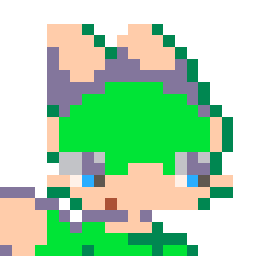

why not frog: portals


Someone has taken all the energy stars and closed the portals. You need to find all the stars and open the portals! Avoid all obstacles on your way!
For those who like to challenge themselves, try the "One Life" mode, where you are given a challenge — to complete the game without dying!
4 comments


.png)


Retrograde is a mind-bending puzzle platformer where you turn back time and collaborate with your past selves to solve puzzles.
Controls
Arrows/WASD - Move C/Space - Jump X/E - Interact with objects R - Restart level (hold) Enter/Escape - Pause |
Inversion Mechanic
- When you use the Inverter, you the player begin travelling backward in time, while the world around you appears to run in reverse.
- While your entropy is inverted, you watch your past self do all the steps you just did in backwards order.
- When you use the Inverter for the second time, you are once again traveling forward through time. You see another version of yourself perform your most recent actions in backwards order, while the clone that was already created switches direction and begins performing them in the order you originally did.
7 comments


Each mask is associated with a palete of colors.
The player changes the map colors to treverse obstacles.
The goal is to shoot the targets as quick as possible.
Together with a slomotion and shadow casting.
2 comments


Mini game developed for the 2026 Global Game Jam, with the theme of Masks:)
2 players and Singleplayer
0 comments


Fortune of Maesk 🩸🌑
Theme: Masks A ritualistic PICO-8 slot machine created in 2.5 hours.
THE LORE
You have arrived at the Temple of MAESK. Before you lays a gargantuan, three-part stone mask, and next to it, an arm-sized hole that simply reads: "BLOOD".
To play is to sacrifice. Stick your arm into the void, let the deity drink, and see if the gears of fate turn in your favor. Will you walk away loaded with gold, or will you leave only with scars you’d rather forget?
HOW TO PLAY
- [X] Key: Sacrifice blood and spin the mask.
- [Z] Key (Hold): View the Matching Guide and Sacred Rewards.
0 comments
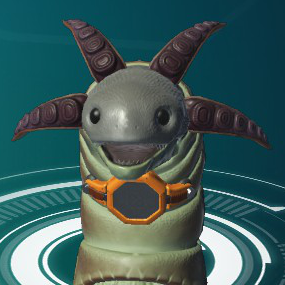


Bee Calm
Made for Global Game Jam 2026 - theme 'Mask'


Play as a beekeeper as you try to fill your honey pot, being careful not to anger the bees.
Controls
- Arrow Keys to Move
- X to interact with the hives
0 comments


Sheepdoggin'
A game made by team Pico-7 for Global Game Jam 2026!
You play as a sheepdog tending to her flock, with the goal of herding them to the exit at the top of the play area. You'll have to keep them safe from the crafty fox, who can be scared away with a well-aimed woof (X or O). If you do your job well enough, maybe you'll even inspire some successors to step up in your stead :)


Credits
Art
- Shane
- Andrea
Music and SFX
- Tristan Sparks
Programming
- Eric
- Eruru
- SatchmoBGW
- acedio@
2 comments


Controls
PC
Z - Confirm
X - Cancel
Enter - Menu
Arrow Keys - Up, Down, Left, Right
Mobile
O - Confirm
X - Cancel
Bar - Menu
D-Pad - Up, Down, Left, Right
Entering the menu will allow you to access mob stats and in-game tutorials.
Gameplay
3v3, classic party, turn-based combat with a rougelike twist. Inspired by Shin Megami Tensei and Persona, fuse unique units, defeat randomized enemies, and conquer challenging boss battles to win the game. A run consists of 30 floors with the express goal of defeating the final boss.
As you ascend, you can utilize defeated enemies to fuse them into your party, granting your units access to new affinities, stronger moves, and more versatile archetypes. Units are defined by a type, role, and rank. These attributes define and constrain the potential level-up move pool and stat growth rates for a unit, but through fusion these limitations can be surpassed, allowing units to inherit skills they could never otherwise learn.
 2 comments
