


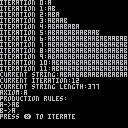
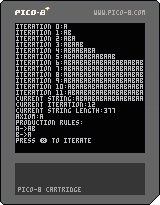
Iterates L-systems. There's no text wrap, so strings extend offscreen.
I'm going to try adding a turtle graphics function that appears over the top of the text that you can press z to toggle on/off.
Simulates algae by default, but you can easily change the system by editing the variable and varprod tables.
If you want to add a constant, just make the corresponding varprod the same character as the variable.
EDIT:
Don't press x to iterate, press z. i made a typo.


 0 comments
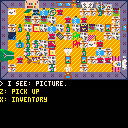
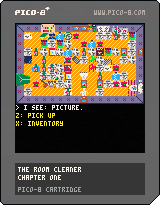
Made for the 1-Room RPG Jam on itch.io
A small RPG where you have to unfold the story, or stories, by interacting with objects and furniture.
All necessary instructions are given in the game.
The gameplay is in place but the story is still very limited. I plan to enrich it and may be add some cutscenes ?
0 comments



Does anybody have some methods for creating a boomerang action effect?
You know...player throws a boomerang and it eases out to X distance, hangs there a sec, then comes back to the player regardless where they are. Zelda-style.
I imagine it's a lot of atan2() math and something like that...but wondering if anyone has something they've already made and are willing to share before I spend weeks trying to figure it out. Thanks!
4 comments


Hi,
I get an out of memory when calling this function (recursive)
when i click a button, i will call select_ball(4,4,3) -> now all objects with the same index (neighbours) wil get index 7
This works perfectly fine, but no matter how many objects will be selected, in the end there is an out of memory exception
balls is a 16x10 multidimensional array.
arrow keys to move the cursor and 'z' to click on a ball
function select_ball(x,y,index)
 	if balls[x][y].index==index then
  		balls[x][y]={index=7}
 		if x>1 and balls[x-1][y].index==index then
 	 		select_ball(x-1,y,index)
 		end
 		if x<width and balls[x+1][y].index==index then
  			select_ball(x+1,y,index)
 		end
 		if y>1 and balls[x][y-1].index==index then
 			select_ball(x,y-1,index)
		end
 		if y<height and balls[x][y+1].index==index then
 			select_ball(x,y+1,index)
		end
	end
end
|
2 comments

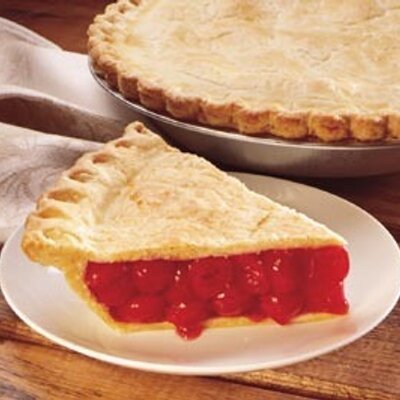

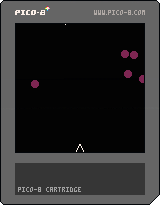
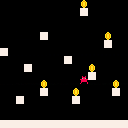
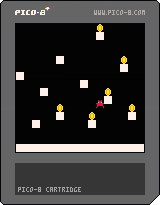
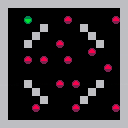
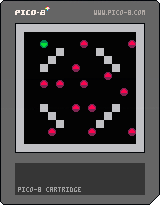
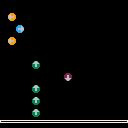
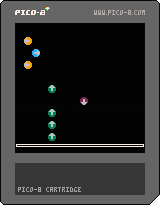

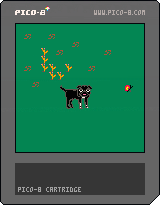
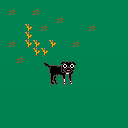
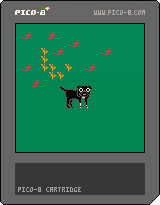
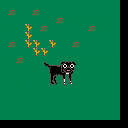



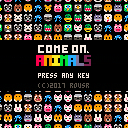
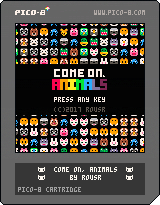
Come on, Animals! is a puzzle game about collecting cute animals.
––
Movement
Up, Down, Left, Right Arrows
Make Selection
Z or C
––
About Rousr
an independent game dev collective that promotes the sharing of knowledge, concepts, and ideas surrounding indie games and their development.
Join our community at http://rou.sr!
For more info:
Rabblrouser on Twitter
babyjeans on Twitter
0 comments







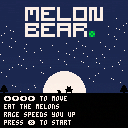
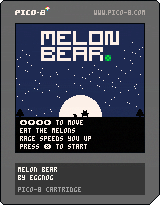
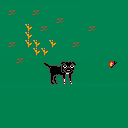
Melon Bear is a neurotic bear, possessed by an all-consuming desire to devour sentient melons. Eat as many melons as you can while managing your Rage Meter to control your speed, but don't forget to avoid enemy bears and the extra-dangerous Melon Wyrm! Can you survive long enough to capture the legendary Golden Melon?
1 comment


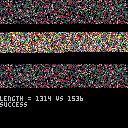
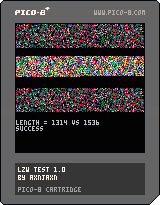
This cartridge doesn't have a very impressive test, but the code might be useful to some of you.
This is an implementation of the LZW compression and decompression routines with variable-width coding, commonly used in a few image formats. I've nibble-aligned the codec, and I provide an interface where you can give addresses for compression/decompression.
The way I envision using this is: construct rooms in map #1, then when you're finished, compress them to map #2 or elsewhere in map #1, then store them to the cartridge. When you're finished building rooms, you only need to include the emit/read symbol functions and decomp, which total to about 340 tokens. You can make a table of addresses for loading these rooms during runtime, and it's pretty fast, all things considered.
As for compression ratio, this demo shows a case where it's pretty bad - you could conceivably end up with bigger data than you started with if your data was sufficiently random, but for maps this is often not the case. If you build a table (as described above), you could mix entries for compressed data and entries for "literal" data to only compress when it helps.
In the future, I might provide an interface for compressing sub-rectangles of the map to avoid having to compress empty space (even though, in theory, this will be highly compressible).
Hope you find it useful!
0 comments
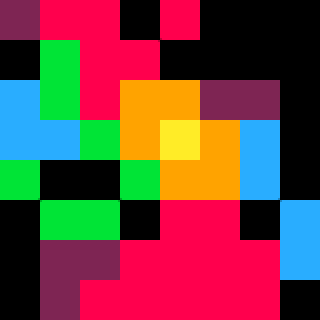
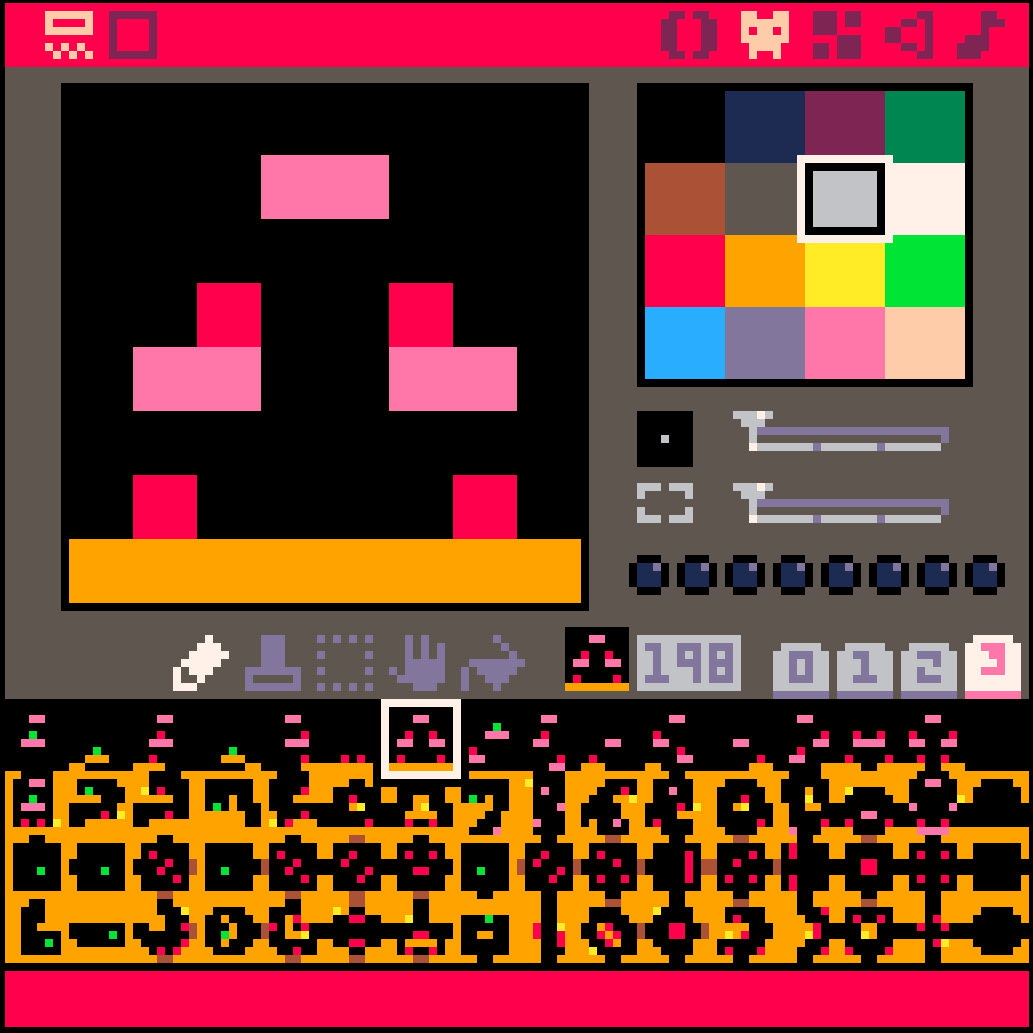
Was running through some theoretical stuff in my "idearrhea" at work the other day - it does seem like the idea behind P8 structure is creative recursion. So, while a few things I've worked on have been tiled up as you'd expect in the map editor... I got to thinking about a thing and how it could be implemented.
The thing I think I want to pull off is to commit the second two pages of sprite data to pixel-point maps of tiles, and then to put THOSE in the map editor. So, instead of rendering realtime maps, it could read each pixel of the map data, and then generate a tile based on the color of said pixel... in order to make a map that's 32x the size of the map data!! Bonus: then the "pause" button can be used to simply display the pixelled data, and you get an instant minimap!
Sure, you'd have to get a bit creative in how the data itself is interpreted - maybe a chunking out squares of biomes where the same tile data is interpreted differently (or upon game start, probabilistically), as well as manually adding some objects after that on a per-scene/screen basis... but it's more to the effect of creating bigger gameworlds.
I guess eventually I'd like to pan this idea out into something Terraria-like? But way more simplified. I'm really just making this post to put the idea out there, though... because I think this is ALREADY how the map data in the cart works to begin with... so then decoding map tiles into sprites, and THOSE sprites into additional grids of sprites...
 7 comments



There's no concise tutorial or code I can track down that could help explain to me how to call and control multiple 8x8 sprites as one. I'd like to use 4 8x8 spirtes as a larger character. There aren't many games that do this and I'm not yet good enough to really parse where in the code this gets described. If anyone knows where I could find this info I'd really appreciate it!
2 comments


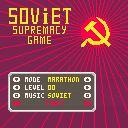
Story:
You are an honorable factory worker and member of the socialist party. You have to sort really important blocky things or else you will be a replaced by a much more productive comrade. To maximize your motivation we've arrested your family (and pets) in our socialist holiday camp (prison). Make the nation proud!
Controls:
Up - Instant drop
Left - Move block left
Right - Move block right
Down - Fast drop
x - rotate right
o - rotate left
s - mute music
d - restart music
f - change music
tab - change blocks
Notes:
This is a straightforward tetris clone with good playability at faster speed levels in mind. For example, the key cooldown gets smaller when you advance levels. It has got 3 music tracks (and a secret one) so you don't get too bored too easily. Fleshing out appealing aesthetics was quite tricky and this thing took me overall about a week. The score calculation and game speed is quite equal to the original Tetris, I changed the response time of the controls a bit to my liking, but somebody who knows the original should feel immediately at home :-)
1 comment


I'll preface this by saying that I am a (very) novice programmer who is really enjoying creating games with Pico-8.
I think that this question is more of a structural one. I don't know how to handle a break in game action so that I can do a simple animation when - say - my main character / spaceship is destroyed.
Lets say that I just want to do something that I imagine is pretty straight forward - say use CLS() with different colours (CLS(1), CLS(2), CLS(3) ... etc.) so that the screen flashes six or seven times when my spaceship is destroyed.
I know how to create the animation that I want through code, but I don't know where to put it / how to structure the _update() or the _draw() to "pause" the game so that the animation can run and then the game can pick up from where it was before.
I'm not sure that I've explained myself all that well here but if anybody has any guidance, I'd appreciate it.
D.
4 comments

