


Hey, folks!
I want to build a GitHub Action to automatically export the cartridge as HTML and publish a GitHub Page.
I have two question around this:
- Did someone already do this, or attempted to? Any clues for prior art would be appreciated.
- I'll need to have the pico8 binary published, but I don't know if I have permission to do that, and I assume I don't. Would it be ok to have a cyphered version that I'd decrypt during the build process with gpg or something?
Cheers!


 0 comments





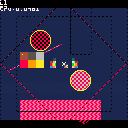
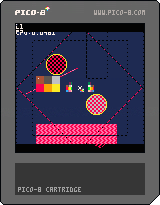
Quick and simple suite demonstrating API references from the pico-8 fandom site.
The default setup (in the editor) displays many preconfigured examples.
As a bonus, the output is a neat & tidy guidelined file folder diskette design.
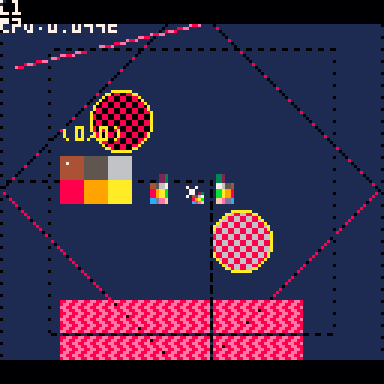
There's some magic numbers and kinks that need to be ironed out but here it is.
Intended to be used as a fast barebones engine or just a learning example kit.
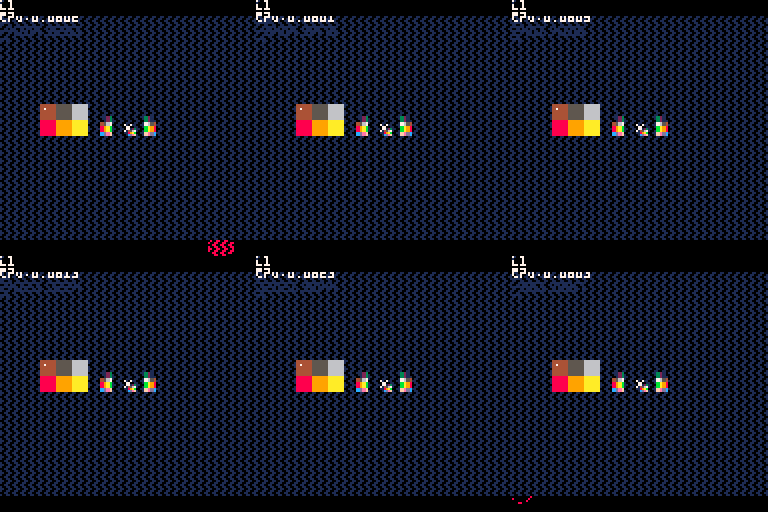
examples from the fandom wikia demonstrated for general purpose
0 comments

wobdat="1f00514302d06ee1179c8d34a74033b359e834319ba6504fa4690ade340000"
str_to_mem(wobdat, 0x4300)
mywob = wob_load(0x4300)
function _draw()
cls(mywob.back_col)
wob_draw(mywob)
end
0 comments

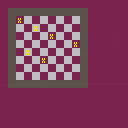
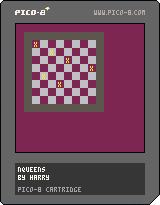
First Cart! I wrote an N queens solver because that was what was in one of my csci classes some time ago.
0 comments




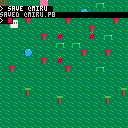



P8C-BUN is now uploaded to itch.io here: https://drake-blue.itch.io/p8c-bun
I've also been working on something else that I really want to share a preview of soon, but I need to clean it up just a little more first.
0 comments

This function is supposed to return a point on a quadratic function, but it doesn't work right.
function launch(h,v,t) return -(v*t^2)/h^2+(2*t*v)/h end |
Whenever I call this:
for i=0,80 do pset(i,launch(40,40,i),8) end |
It appears like this:

Did I do something wrong, or is this a fault of how Pico-8 works?
0 comments




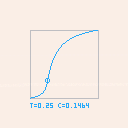
This is an implementation of the function described on this short paper:
https://arxiv.org/abs/2010.09714 (twitter thread)
It is amenable to tweeing/easing in games. I have programmed easing functions in the past and one of the problems about them is that you need to code "families of easing functions":
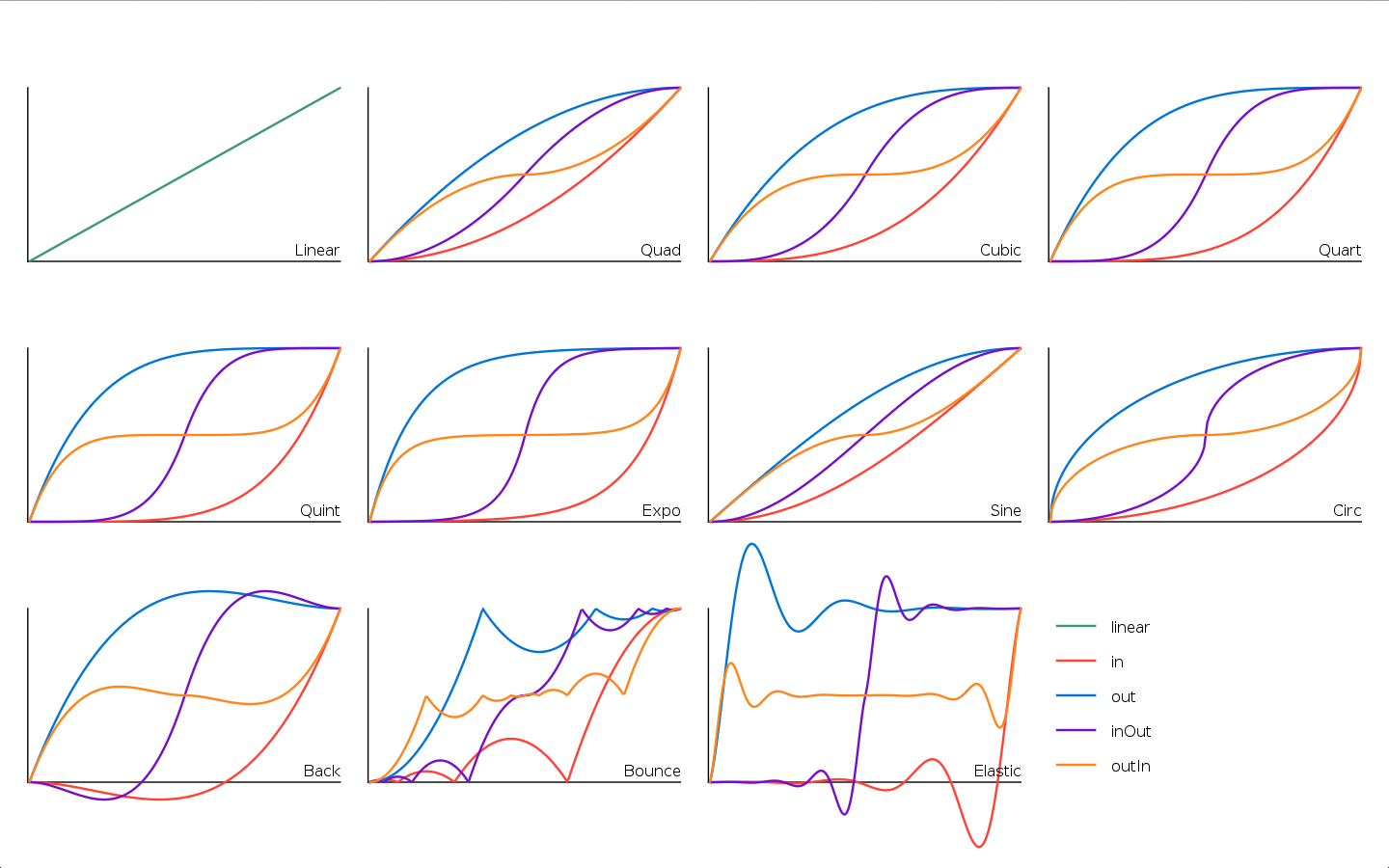
(That's from tween.lua, if you are curious).
I like this function because it can aproximate all of the "smooth families of functions" on that graph (all except the "back", "bounce" and "elastic" families) with a single function, plus it adds an infinitude of variants. Not bad for ~66 tokens.
 0 comments
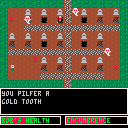
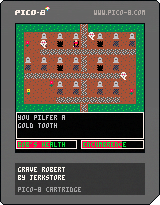
Grave Robert is about a guy trying to save his daughter and escape to a better life.
Features:
-Grave Robbing
-Mad Scientists
-Multipule endings
-Three difficulty levels
-Probably some spelling mistakes
Parental Guidance: PG-13 due to Adult Situations.
0 comments

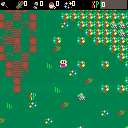



3AM SIMULATOR
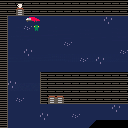
a nice little simulator. arrow keys to control.
grab the glass, the water and then go to the toilet to win.
0 comments

I saw a cool post on reddit showing off a handheld pico 8 player using a raspberry pi zero and a tft 1.3" bonnet from adafruit. The bonnet had both input and a tiny screen, and connects with the raspberry pi via pins.
But i also really liked the idea of being able to play games with Friends, so i was thinking if it would be possible to link 2 raspberry pi's, either via bluetooth or wifi or cable. Where the one RPI (raspberry pi) would be in normal mode and be playing pico 8, while the other would be in a "mirroring mode", via the connection it would mirror the display of the 1st RPI, and would send inputs to the 1st RPI (but as player 2)
However i am unsure how to approach this project, and would like some insight and or CC
0 comments

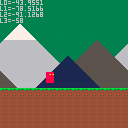
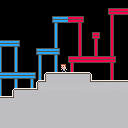
Testing if I can make a parallax effect with infinite scrolling
Right arrow to move while held down; Left arrow to move one frame.
Feel free to use the code as you with :)
0 comments